Building a library of videos for key clinical skills
Physical examination is a key skill studied by first- and second-year students in the MChD program. In order to support student learning and preparation for their OSCEs (Observed Structured Clinical Examinations), the Clinical Skills Academic Coordinators collaborated with the TELT team to create standardised and re-usable videos demonstrating each of the key clinical skills.
Project snapshot
Program and discipline
MChD Year 1 and Year 2; Clinical Skills
Learning activity
Physical examination skills
Technology used
Adobe Premiere, Vimeo, kuraCloud
Student numbers
250 students
Final product
39 videos created
Considerations
Time-intensive to create
Resource purpose
Used to train examiners and tutors
Benefits
Improved access to content
What was the issue?
Clinical skills were historically taught in-class, with a range of tutors who used different approaches.
Before 2017, physical examinations were taught during in-class lectures and tutorials held at the Canberra Hospital. A tutor would demonstrate the physical examination technique on a volunteer patient, and students would take turns practicing on the patient in pairs. These skills would be assessed at the end of each semester in an Observed Structured Clinical Examination (OSCE), graded by an examiner using a rubric.
This approach presented several challenges:
Standardisation of learning and assessment. There was a lack of consistency between different tutors and the techniques could differ from those that were assessed during OSCEs. Students turned to videos from other sources which often introduced confusion about the specific steps assessed at ANU.
Feedback: Time for practice with a tutor and volunteer patient was limited.
Accessibility: Demonstrations in the lecture theatre were difficult to see from many parts of the auditorium and on the recording.
What was the solution?
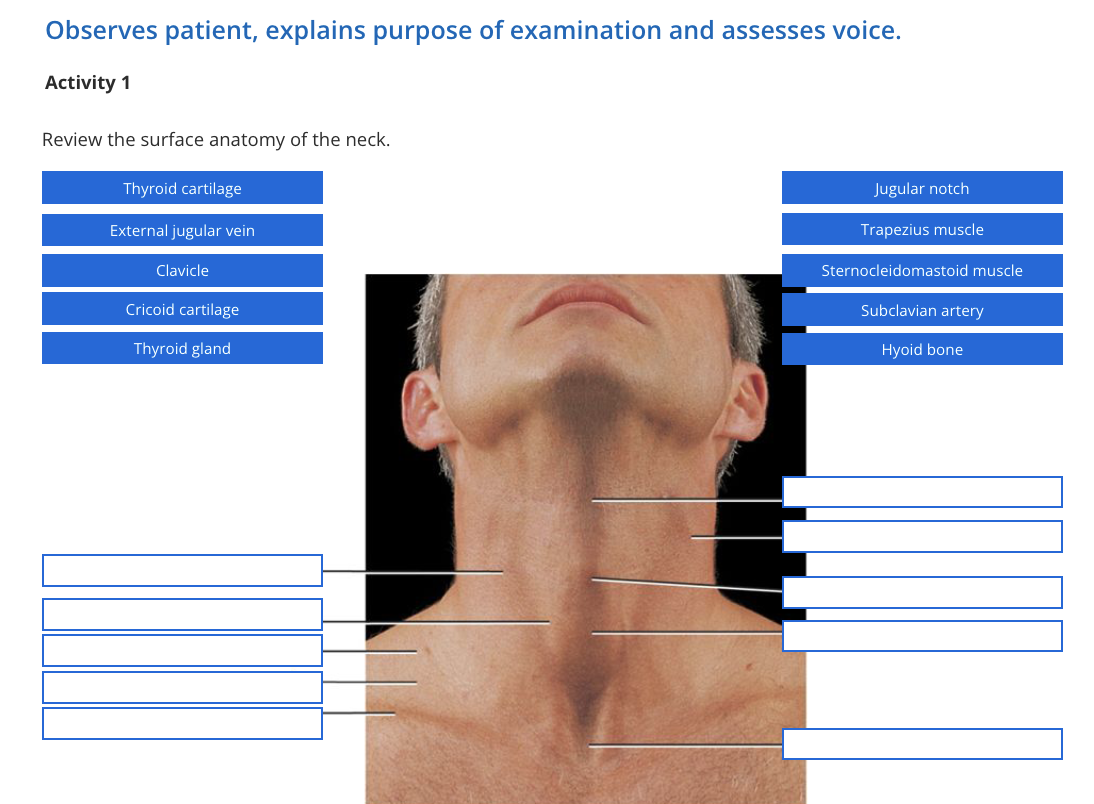
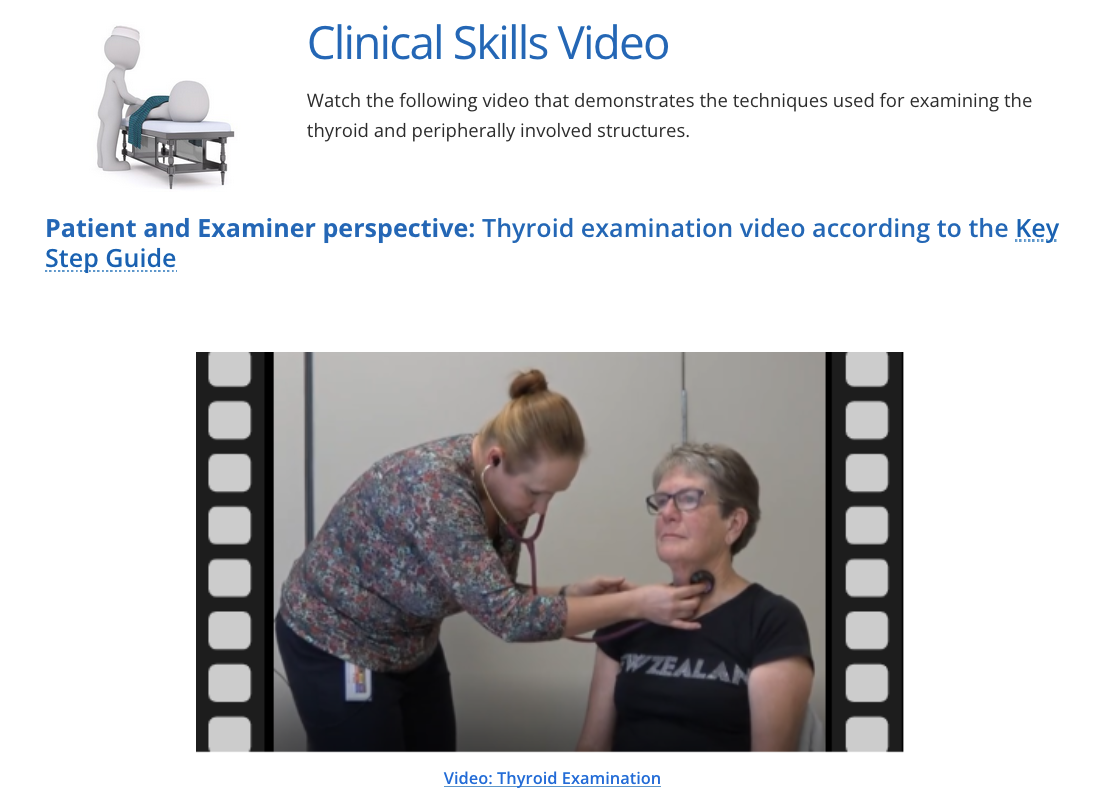
Videos were produced for the key physical examination skills and embedded into an online lesson in kuraCloud with interactive pre- and post-video activities.
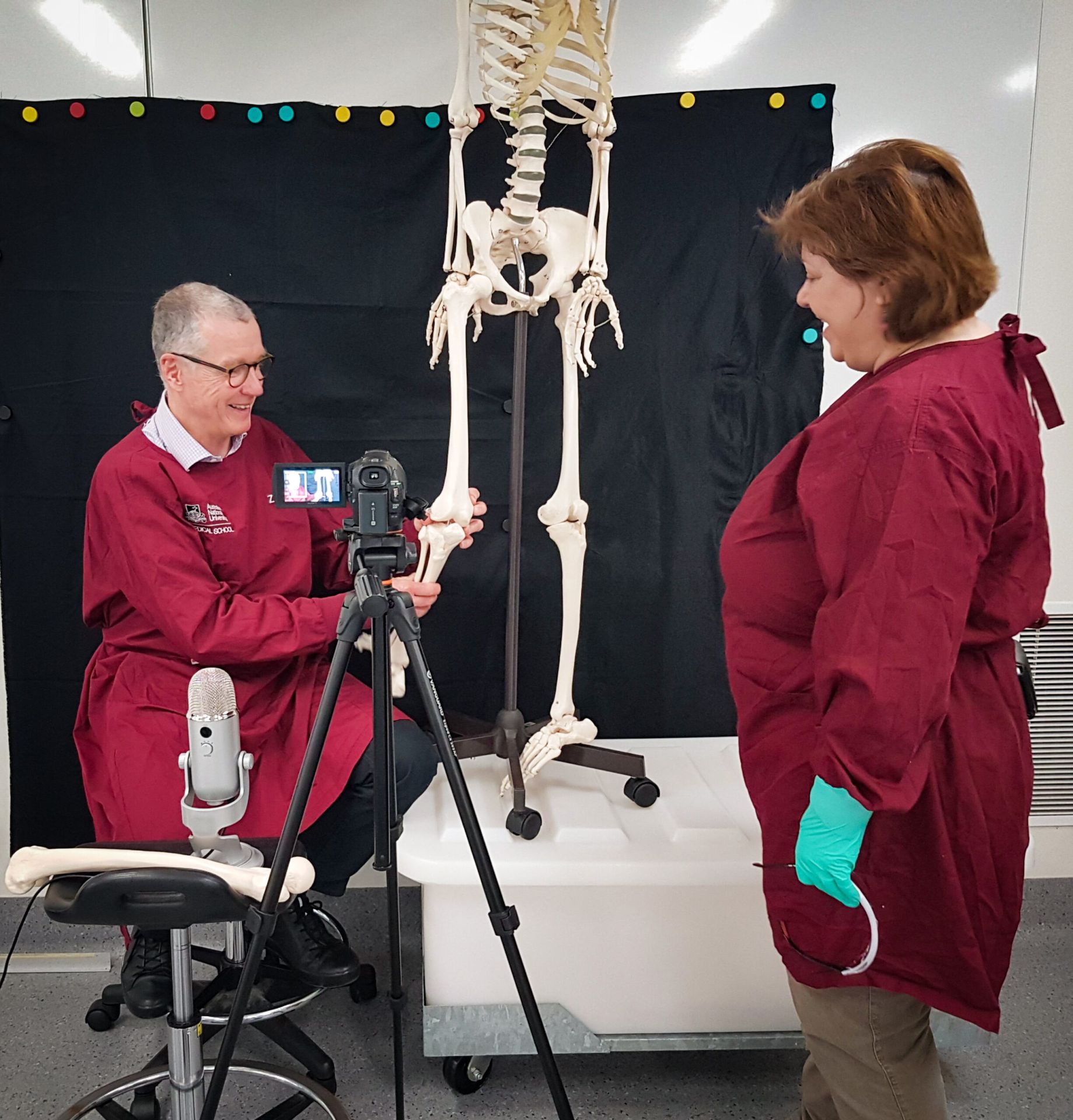
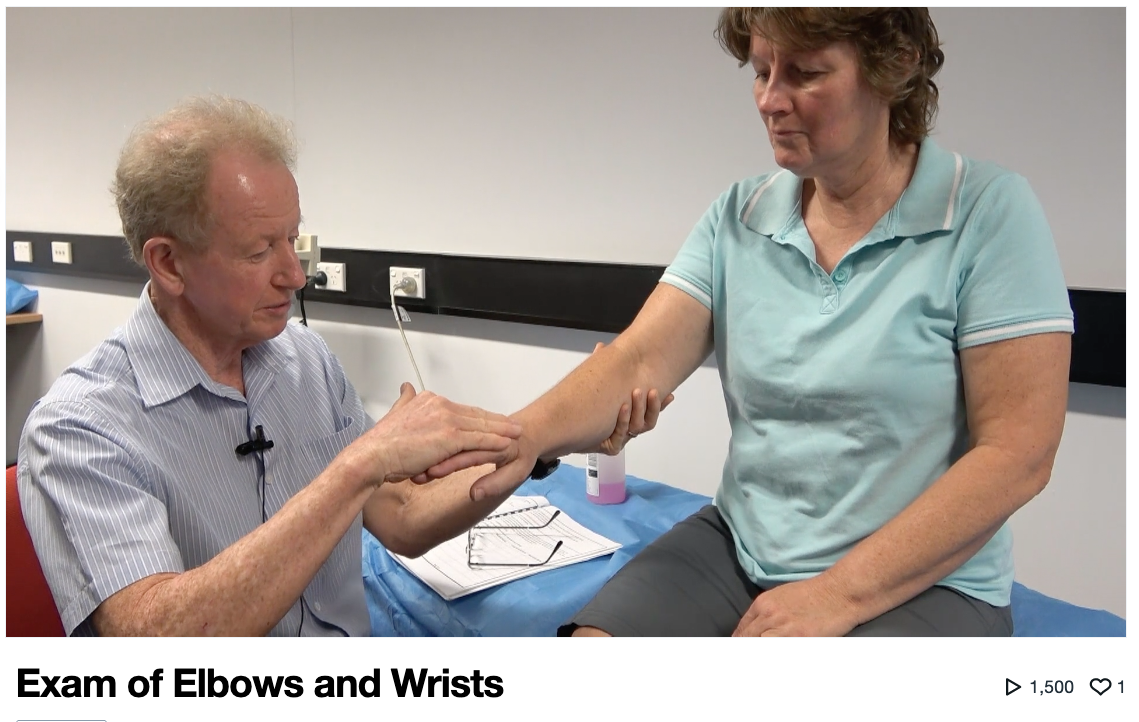
In each video, the clinician would demonstrate a physical examination on a volunteer patient or with a model. The videos were then captioned and included with pre-class learning (e.g. key theories or anatomy) and post-class formative activities for testing knowledge.
The examinations were undertaken according to the rubric used for OSCEs, and shown to the examiners before they begin assessing students. The in-lecture demonstrations were continued despite the introduction of the videos as they provided an opportunity for clinicians to provide a detailed explanation about the process of the examination and interpreting the results, as well as an opportunity for students to ask questions.
The videos were invaluable in 2020 when all Phase 1 teaching (Years 1 and 2) was delivered online due to the Covid pandemic, where they were used as resource material during online tutorials to discuss examination techniques. Students were asked to study the videos and practice on a family member or friend before returning for face-to-face teaching intensives. This improved student skill levels significantly, despite not having regular interaction with patients or opportunity for formal revision.
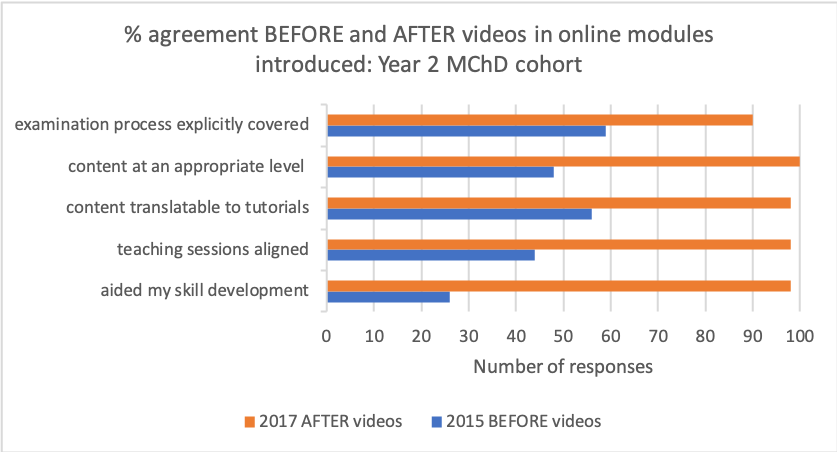
Surveys were conducted with students on their satisfaction with Clinical Skills teaching before and after the introduction of the examination videos. The data shows a strong agreement from students that the online modules and videos significantly increased the effectiveness of the clinical skills teaching.
Testimonials
Really appreciate the time and effort that was put in. Makes us less stressed about any differences in tutors or if you have to miss a session or something else happens.
The videos were great to help prepare and study. A great revision tool and easy way to clarify any uncertainties. It was so helpful and helped us maintain consistency. It is also a great way of ensuring consistency between tutors and what we learn.
[The videos] made being at Queanbeyan [hospital on placement] much easier, as skills are not always taught clearly and we absolutely can’t see the demonstrations during lectures.
The availability and use of videos is correlated with improved summative assessment marks and fewer failed students. Consistency of tutor teaching has improved. Examiners and new tutors can be trained easily saving valuable time for the clinical skills chairs. The video production process has enhanced the teaching and resources for each skill.
The Team
The project team consists of:
Janelle Hamilton
Michelle Barrett
Kat Esteves
Alex Webb
Vinuri Wijedasa
Di Whiteman
Project funding:
CHM Dean’s Strategic Funds for Education
Author's note
Thanks to Bruna Contro Pretero and Jen Xiang for their work on developing this case study.